
What is the flow table test?
The flow table test measures the diameter of fresh concrete after fifteen drops of a flow table and indicates its consistence. How the test works, flow classes F1 to F6 and how it differs from the slump test.
What is matchboarding?
Matchboarding (Dutch: schroot or schrootjes) is thin, profiled tongue-and-groove timber cladding for walls and ceilings. Profile types, fixing to battens and tips against warping and gaps.
R290 propane heat pump: why propane is the smartest refrigerant of 2026

All about the R290 propane heat pump: lowest GWP, flow temps up to 75°C for existing radiators, F-gas rules, safety and the best brands.
Set your heating curve for autumn: weather compensation without guesswork
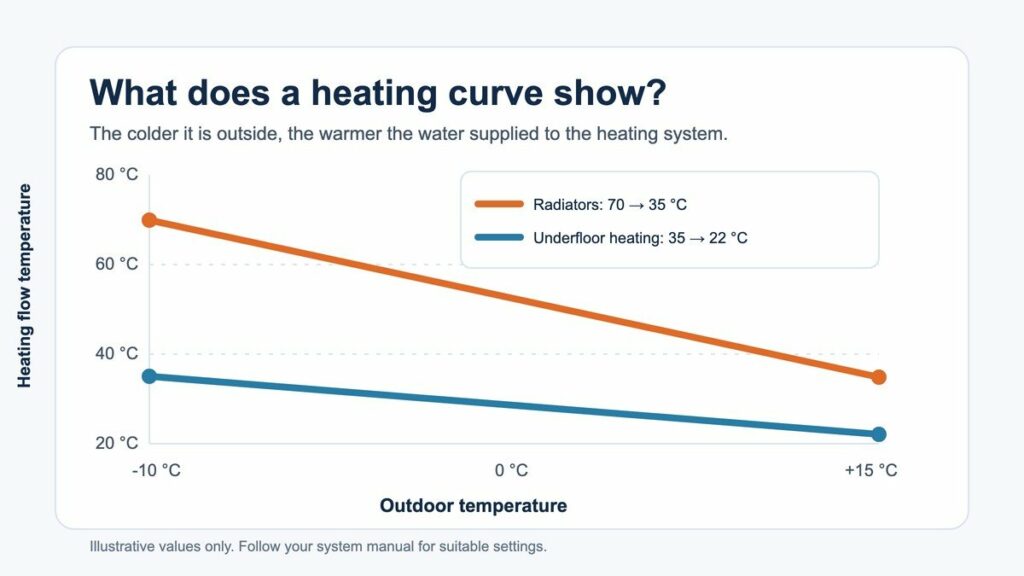
Learn what a heating curve does, how to check boiler or heat pump controls, and how to adjust safely while keeping every room warm.
What is a screw jack for foundation repair?
A screw jack (screw prop) for foundation repair is an adjustable steel support placed in pockets in a wall to transfer the wall onto its new foundation. How it works and points to watch.
What is a screw displacement pile?
A screw displacement pile is a foundation pile formed in the ground with a screw auger, without vibration. The main types, advantages over driven piles and what to look out for.
What is a helical vault?
A helical vault is a vault that winds upwards like a spiral, usually beneath a stone spiral staircase. Construction, examples and points to watch when maintaining historic stair towers.
What is a self-drilling dowel?
A self-drilling dowel is a steel dowel that passes through timber and slotted-in steel plates in a single operation. For neat steel-to-timber connections without visible plates. How it works and tips.
What is a closed thatched roof?
A closed thatched roof (Dutch: schroefdak) is a thatched roof in which the reed is screwed, without a cavity, onto solid roof boarding or insulated roof panels. Pros, cons and points to watch.
What is a screw combination pile?
A screw combination pile is a vibration-free foundation pile that combines a precast concrete pile with a grout shell formed in the ground. How it works, its advantages and applications.