
What is a workers’ house?
What is a workers’ house? A workers’ house is a simple, compact dwelling that was originally built to provide housing for labourers and their families. This housing type arose mainly during the industrialisation of the 19th century, when the migration to cities caused enormous housing shortages. Characteristics Workers’ houses share a number of recognisable features: […]
How to Lay a Garden Path: Costs, Materials and Step-by-Step Guide (2026)
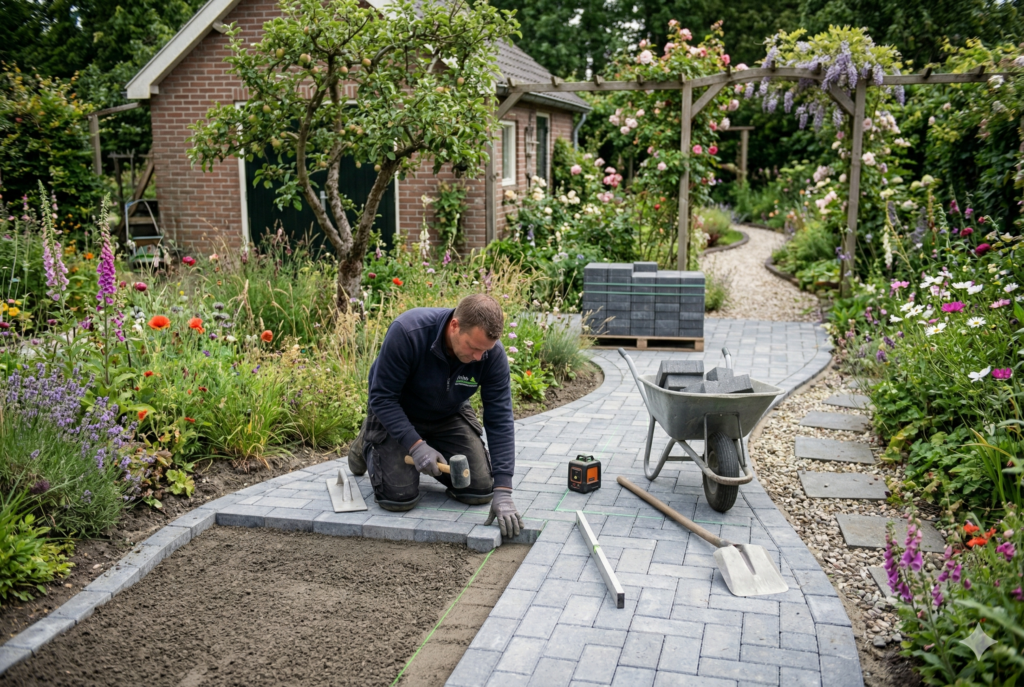
Laying a garden path is a manageable weekend project that transforms the look of your garden. DIY costs: €10 to €50 per m²; landscaper: €40 to €120 per m². What Does a Garden Path Cost? DIY vs. Landscaper Path Type DIY (materials) Landscaper (materials + labour) Gravel path €8 – €15 per m² €25 – […]
Cavity Wall Insulation: Costs, Materials and When to Use a Specialist (2026)
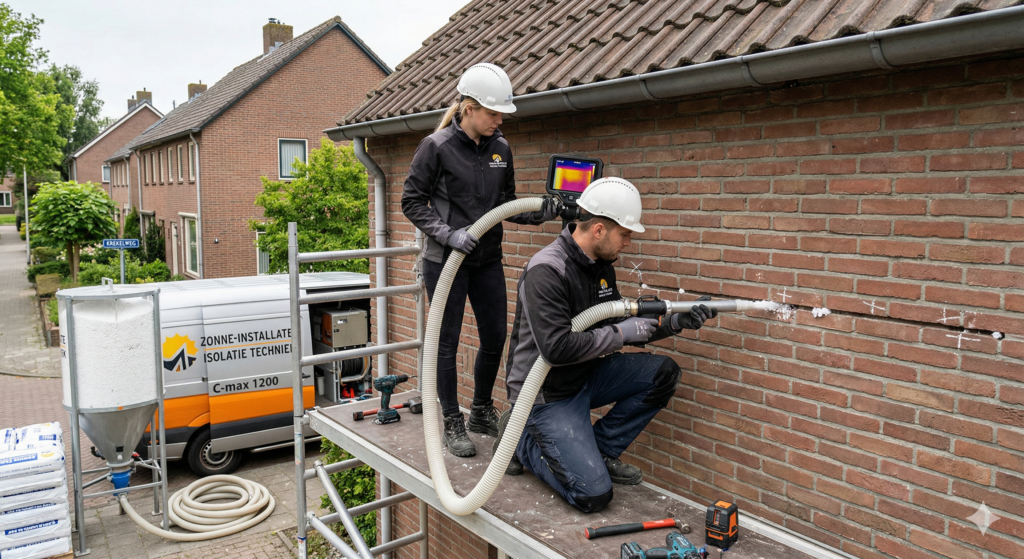
Cavity wall insulation is one of the most cost-effective measures to improve the energy efficiency of a home. Uninsulated cavity walls typically account for around 30–35% of all heat lost from a house. What Does Cavity Wall Insulation Cost? Cost per m² of Wall Area Material DIY Specialist (including installation) EPS beads (polystyrene) Not possible […]
What is arabesque?
An arabesque is a decorative ornamental pattern characterised by flowing, interlacing lines that form rhythmic arrangements of stylised plant forms, tendrils, scrolls and geometric shapes. The arabesque is one of the most widespread and recognisable motifs in architectural decoration, found across Islamic, Mediterranean, Renaissance and Art Nouveau traditions. Origins The term “arabesque” derives from the […]
What is an aquifer?
An aquifer is a geological formation of permeable rock, sand or gravel that stores and transmits groundwater in quantities sufficient for extraction through wells or springs. Aquifers are essential components of the water cycle and serve as the primary source of drinking water, agricultural irrigation and industrial water supply in many regions around the world. […]
What is aquathermal energy?
Aquathermal energy is a sustainable energy technology that extracts thermal energy (heat or cold) from surface water, drinking water or wastewater and uses it to heat or cool buildings. As countries work toward reducing dependence on natural gas and fossil fuels, aquathermal energy is gaining attention as a reliable, locally available and low-carbon alternative for […]
What is an aqueduct?
An aqueduct is an engineered structure — typically a bridge or elevated channel — designed to transport water across a valley, river, road or other obstacle, using gravity to maintain a continuous flow. The word comes from the Latin aqua (water) and ducere (to lead). Although most closely associated with ancient Rome, aqueducts have been […]
What is an apse vault?
An apse vault (also called an apsidal semi-dome or conch vault) is the half-dome structure that covers an apse — the curved or polygonal projection at the east end of a church or basilica. The apse vault is one of the most visually striking elements of ecclesiastical architecture, forming a concave canopy above the altar […]
What is an apse?
An apse is a semicircular, polygonal or occasionally rectangular projection at the east end of a church or basilica, typically housing the altar and forming the focal point of the interior. The apse is one of the oldest and most enduring elements in Western religious architecture, present from the earliest Roman basilicas through to modern […]
What is an apsidiole?
An apsidiole is a small secondary apse — a semicircular or polygonal recess — projecting from the walls of a larger church, typically found flanking the main apse, the choir or the transept arms. Apsidioles are characteristic of Romanesque and early Gothic ecclesiastical architecture and served both liturgical and spatial purposes. Function and use In […]