
What is organic growth?
Organic growth is the gradual, unplanned development of buildings and neighbourhoods within existing structures. How to recognise it and what it means for renovation.
What is an orangery?
An orangery is a heatable building for overwintering citrus trees and container plants frost-free. Features, difference from a greenhouse and practical points.
Tiny house on your own land: is it allowed, what does it cost and how do you sort the permit in 2026?
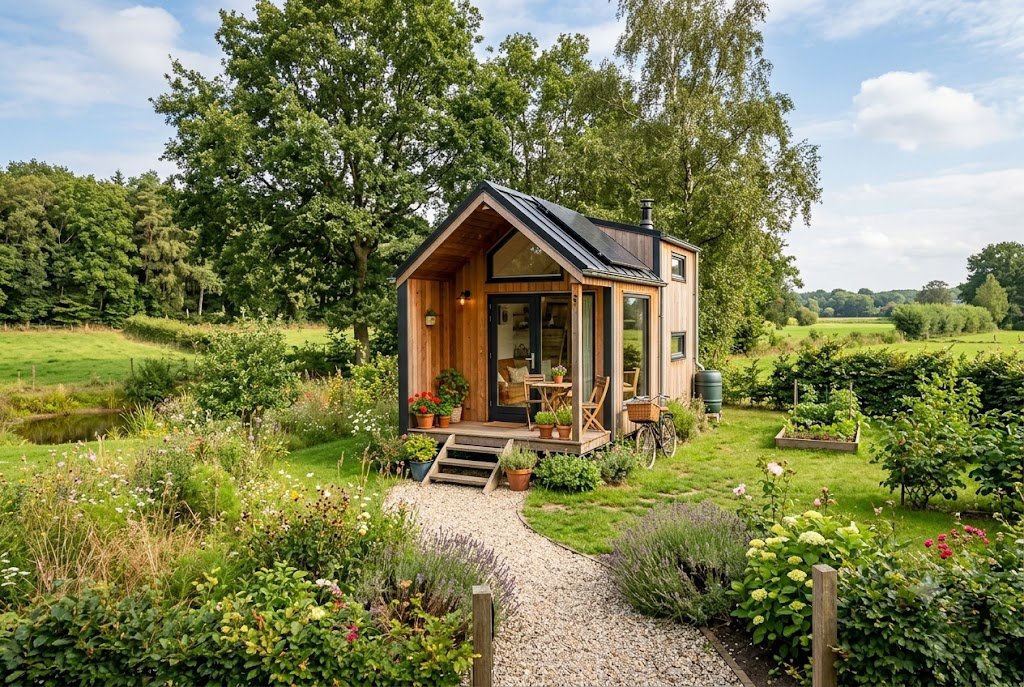
Can you put a tiny house on your own land? Permits in 2026, all-in costs with a table, prefab vs self-build, connections and the new family-home law explained.
Perovskite solar panels: what they are, the efficiency and whether to wait (2026)
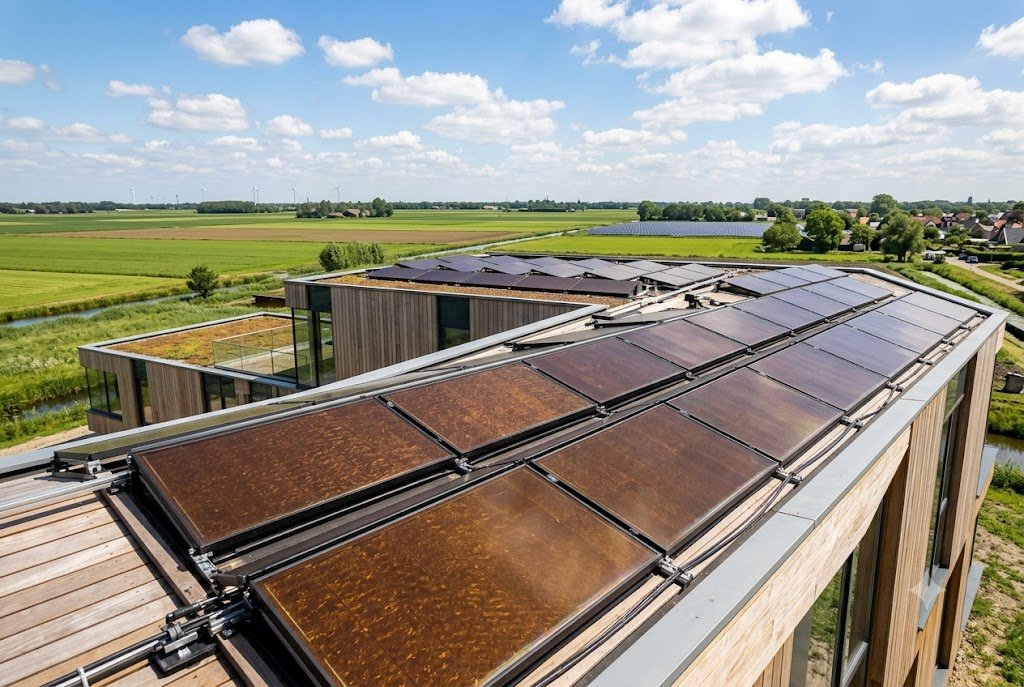
Perovskite-silicon tandem panels hit 34.85% in the lab. What they are, when you can buy them and whether to wait. Explained honestly.
What is topping up a building?
Topping up — also called a vertical extension, Dutch *optoppen* — is adding one or more complete storeys on top of an existing building. Where an extension grows sideways, topping up grows upwards. It is one of the most effective ways to add homes without taking new land. It is applied above all to post-war […]
What is swaging a pipe?
Swaging — Dutch *optrompen* — is widening the end of a pipe so that a second pipe of the same outside diameter can be pushed into it. The widened end is called a socket or spigot socket. It is one of the oldest ways of joining two pipes without a separate fitting. How it is […]
What is surface water?
Surface water is all water that stands or flows openly at the surface: ditches, brooks, canals, rivers, lakes, ponds and reservoirs. It is the counterpart of groundwater, which sits underground within the soil. Surface water bodies are almost always managed water. Depending on the country and the watercourse, responsibility lies with a drainage board, water […]
What is riser height?
The riser height (usually just “the rise”) is the vertical distance between two consecutive treads on a staircase: how far you have to step up each time. Its horizontal counterpart is the going, the usable depth of a tread. Rise and going together decide whether a staircase walks pleasantly or whether you feel it every […]
What is public space?
Public space is the freely accessible part of the built environment: streets, pavements, squares, parks, green areas, play areas and public water. In practice, everything that is not behind a property boundary or a facade belongs to it. Public space is almost always owned by the local authority, sometimes by a highways agency or water […]
What is opus?
Opus is Latin for work or built work. In architecture it is the collective term for Roman walling and flooring techniques, each with a qualifier describing how the material was stacked or laid: opus incertum, opus reticulatum, opus spicatum and so on. The Romans built many walls as cored construction: two outer faces of stone […]